
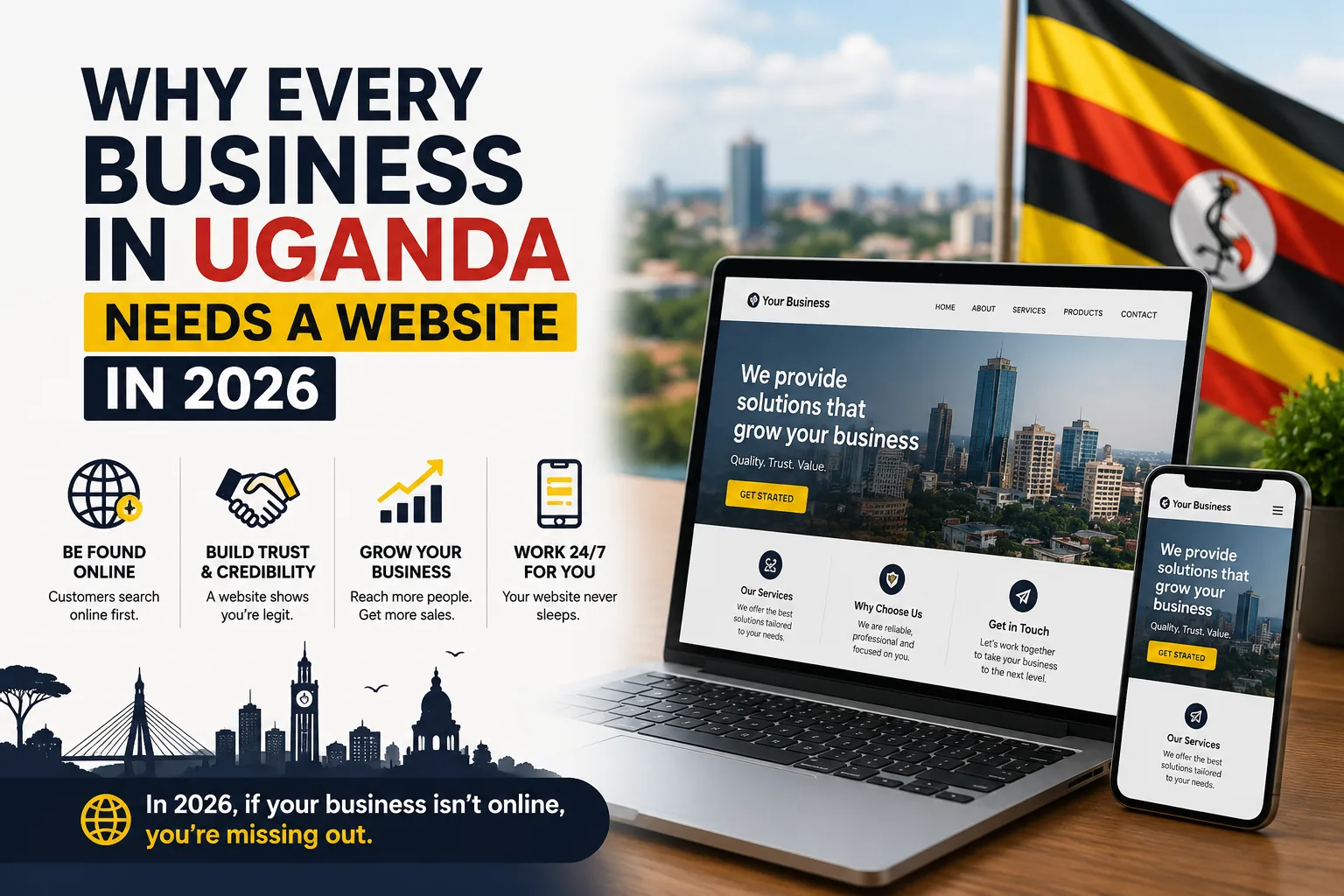
A website gives Ugandan businesses a trusted home online and helps customers act faster. For small and growing businesses, design is not decoration at the end of the process. It is part of how customers understand value, compare options, and decide whether a company looks ready to serve them professionally.
At Eximious Tech, we often see that the strongest brands are not always the loudest. They are the clearest. Their message is easy to understand, their visuals feel consistent, and their online presence answers the questions a customer is already carrying. This article explains the practical thinking behind every business in uganda needs a website in 2026, with a focus on businesses that want to grow steadily and look credible online.
Start With the Business Goal
Every effective digital or design project starts with a clear business goal. A restaurant may need more bookings, a school may need parents to trust its professionalism, and a startup may need people to understand a new offer quickly. When the goal is clear, the design decisions become sharper. Colours, images, layout, copy, and calls to action all work toward the same purpose.
Without that goal, it is easy to create something that looks attractive but does not help the business. Professional design asks better questions before creating visuals. Who is the audience? What do they need to know first? What should they feel when they see the brand? What action should they take next? The answers guide the final result.
Build Trust Through Consistency
Customers notice consistency, even when they cannot explain it. A business that uses one style on its website, another on posters, and another on social media can feel scattered. A consistent brand feels more stable. It tells customers that the business pays attention, values quality, and is serious about its public image.
Consistency does not mean every design must look identical. It means the brand should have recognizable patterns: a clear logo, a dependable colour palette, readable typography, a familiar tone of voice, and image choices that fit the same personality. Over time, those repeated signals make the business easier to remember.
Make the Message Easy to Understand
Good communication respects the customer's time. Most people do not study a poster or website slowly at first. They scan. They look for the business name, the offer, the benefit, the location, the price if available, and the easiest way to contact the provider. If those details are buried or unclear, the design loses power.
A professional layout creates order. It gives the most important information visual priority and avoids clutter. A strong headline, useful supporting copy, and one clear next step usually perform better than a crowded design trying to say everything at once. Clarity is especially important on mobile, where space is limited and attention is short.
Use Visuals That Match the Audience
Design should feel appropriate for the people it is trying to reach. A youth event, a corporate service, a church program, and a technology startup should not all use the same visual language. The audience affects the energy, formality, colour, photography, and writing style. This is where custom design gives a business an advantage over generic templates.
When visuals match the audience, the brand feels more relevant. Customers can quickly sense that the business understands their expectations. That feeling supports trust, and trust supports action.
Connect Design With Real Customer Action
The final test of any business design is whether it helps someone take a useful step. That step might be calling, sending a WhatsApp message, visiting a shop, reading more details, booking a service, or sharing the brand with someone else. Professional design makes that path simple.
For websites, this means clear navigation, fast loading, readable pages, visible contact options, and helpful content. For posters and social media graphics, it means strong hierarchy, correct details, and a call to action that is easy to follow. The best visuals do not only impress people; they guide them.
Measure and Improve Over Time
Brand growth is not a one-day activity. A business should watch how customers respond, which posts get attention, which pages people visit, and which services create the most inquiries. This feedback helps the brand improve. Sometimes a small change in wording, a better image, or a clearer service page can improve results significantly.
Design also needs maintenance. As a business grows, its visuals should mature with it. Updating a website, refreshing brand materials, and publishing useful blog content all show that the business is active and reliable. Search engines and customers both benefit from fresh, helpful information.
Practical Checklist
Before publishing any important design or web page, check whether it answers these questions: Is the main message clear within a few seconds? Is the contact information visible? Does the visual style match the brand? Is the page mobile friendly? Are the images sharp and relevant? Does the copy sound human and specific? Is there a clear next step?
If the answer is yes, the business is in a stronger position. If the answer is no, the design may need refinement before customers see it. Care at this stage protects the brand from looking rushed or unprepared.
Final Thoughts
Why Every Business in Uganda Needs a Website in 2026 is ultimately about helping customers feel confident before they speak to you. People are more likely to contact a business when its brand looks organized, its message is clear, and its online presence feels alive. That is the kind of practical, trust-building design that supports real growth.
Eximious Tech helps businesses improve that first impression through branding, website visuals, posters, flyers, and social media designs built around each client's goals. A professional brand does not need to be complicated. It needs to be clear, consistent, useful, and honest.